On Wednesday 25th November, ofgem announced the new level of the energy price cap, to begin on the 1st of January 2027. As was widely trailed, the price is going up, and not by a trivial amount.
The present price cap (dual fuel) is £1,861 for standard credit, and come January, it will be £2,328. That’s a rise of £467, or quite neatly, 25%.
Naturally, everybody has been quite keen to tell us how this is all due to a war in the Middle East, driving up the price of gas. The intrepid team at BBC Verify are on the case:
Around a third of Great Britain’s natural gas comes from the UK’s own North Sea fields.
But the rest is imported – some by pipeline and some by ship as Liquefied Natural Gas (LNG) – which means the price paid is determined by international markets.
Since the US-Israel strikes on Iran began on 28 February the UK wholesale price of gas has more than doubled.
Analysts say this is a direct consequence of the Middle East conflict.
Said the minister, Polly Billington, at Thursday’s debate:
This is a stark reminder that 40 years of Conservative privatisation has left Britain dangerously exposed to international gas markets and global events. Ofgem is clear that the price cap rise is driven primarily by soaring international wholesale gas prices as a consequence of the war in Iran.
[40 years of Conservative privatisation, 13 years of which were under a Labour government.]
Billington, of course, certainly has a handle on the condition of the Universe:
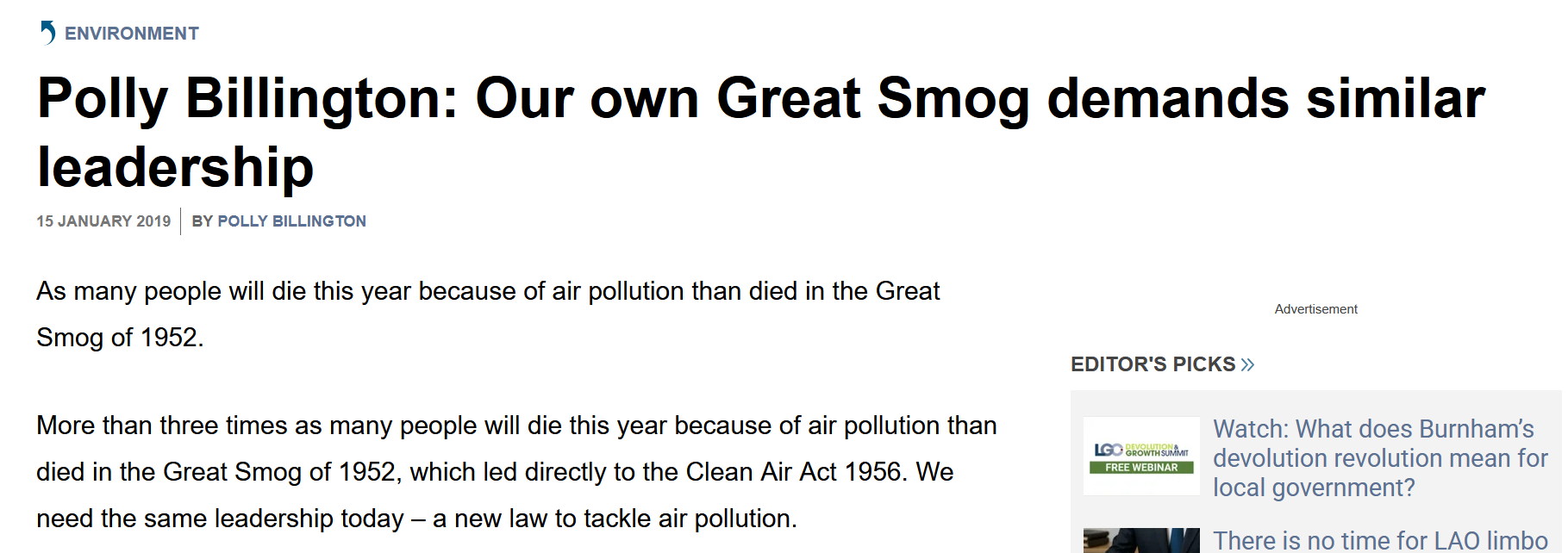
[No, I don’t understand how this works, so don’t ask. My question: did anybody, anybody at all, read it either before or after it was put up for the world to admire?]
The minister was also heard talking about the need to get off the “fossil fuel rollercoaster” in interviews on College Green.
Well, I was interested, as I often am, in “international gas prices.” The price of gas in the UK, saith BBC Verify, has more than doubled. What has happened in the US, where we obtain a large quantity of our gas? For that, I asked Trading Economics.
In the US, natural gas is $3.51 per MMBtu.
In the EU, it is 83 Euros / MWh.
In the UK, it is 207 p / therm.
But those measures are not easily comparable. Let’s convert the EU and UK prices into $/MMBtu. Well, the equivalent over this side of the pond, +/-, is $26.5/MMBtu, or 7.5 times as much as on the other side of the pond, where presumably they can’t wait to get off the fossil-fuel rollercoaster. According to Trading Economics, the EU’s price is up 188% on the year; in the UK, it’s up 175%; and in the US, it’s down 26%.
Something that our politicians do not seem to understand is that the answer to this crisis is to increase supply. That’s because, when the supply of a commodity with inelastic demand falls, the price goes up like a rocket. Energy is a commodity like that.
Instead, the Energy Insanity Bill, or whatever it’s called, intends to reduce supply still further, by banning the opening of any more gas fields. [Rosebank, mostly oil, would be the last to be permitted, if the government can even bring itself to offer us that crumb.]
As is often the case, actions betray the lie of words. There would be no need to ban further extraction if the “transition” was organic and beneficial. The “transition,” however, is to a forced energy-poor future, and it is not the future we dreamt of.
/message ends
PS. The Fed has a note on the natural gas outlook for the EU for the coming winter.

