It may not be obvious to many any longer, but it is a fact that the impact of the UK’s citizens does extend a little way beyond our local carbon dioxide emissions. Regular readers will know that one of my bugbears is the way our lifestyles can (so far) be propped up by the “non-existent” carbon dioxide emissions of our external suppliers. Anyway, you will be relieved to hear, this note isn’t about that.
There are forms of real pollution, with localised effects, that have been all but swept aside from the public conversation. The important point on many of these is that local actions produce local benefits, which is the opposite situation for the one quite innocuous compound with which our policy makers are obsessed. Reduce (say) sewage entering watercourses: see an immediate and proximal benefit. Some sources of pollution have been dealt with territorially in the UK (sulphur dioxide is a good example: anyone remember the acid rain scare that preceded “teh climate crisis”?).
I have a book on air pollution and plant life – yes, it’s out of date, but its mentions of carbon dioxide note that increases in the goblin gas will: reduce transpiration, increase photosynthesis, increase growth rates, increase biomass and crop yield, increase water use efficiency and increase leaf area index (LAI: a measure of how green Earth is). C4 plants can expect to show 22% higher yields under 700 ppm CO2, and C3 plants 41%. It’s quite disappointing that this fodder for sceptics is kept firmly away from public discourse. Some facts are harmful. To the cause, at least.
It was quite warm yesterday, and the sun was incredibly strong – as strong, I thought, as I had felt it in the UK. It got me wondering whether the quantity of sunlight hitting the ground is higher now than, oh, say 1976. Well, the answer is almost certainly yes; more on which another day. But while searching for data on aerosol concentration I stumbled upon a different dataset, which was “released quietly under cover of darkness,” or whatever it is the alarmists say when what they consider adverse news for the UK re “teh climate crisis” is whispered, rather than trumpeted.
It was a dataset called,
Material footprint, UK, 1990 to 2023
…which was released, quietly, et cetera, on 8th May 2026. Here we have the UK’s demands on resources, including but not limited to our insatiable demand for (imported) carbon dioxide emissions. The material footprint of the UK is divided into 4 buckets in this dataset, of which one is fossil fuels. The others are biomass, metal ores, and non-metallic minerals. Biomass is food, wood, etc; metal ores – well, they’re metal ores, and non-metallic minerals are things like aggregates and limestone. Yes, I know, limestone does contain metal, but the AI helpfully informs me that it does not go into the metal ores bucket, because it is not mined to extract calcium, whereas bauxite is mined to extract aluminium.
Anyway, which of these, which of the different measures of the UK’s impact on the world, has gone up, which has gone down, and which stayed the same? I’ll put a picture in here, to give you a second or two to think about it.
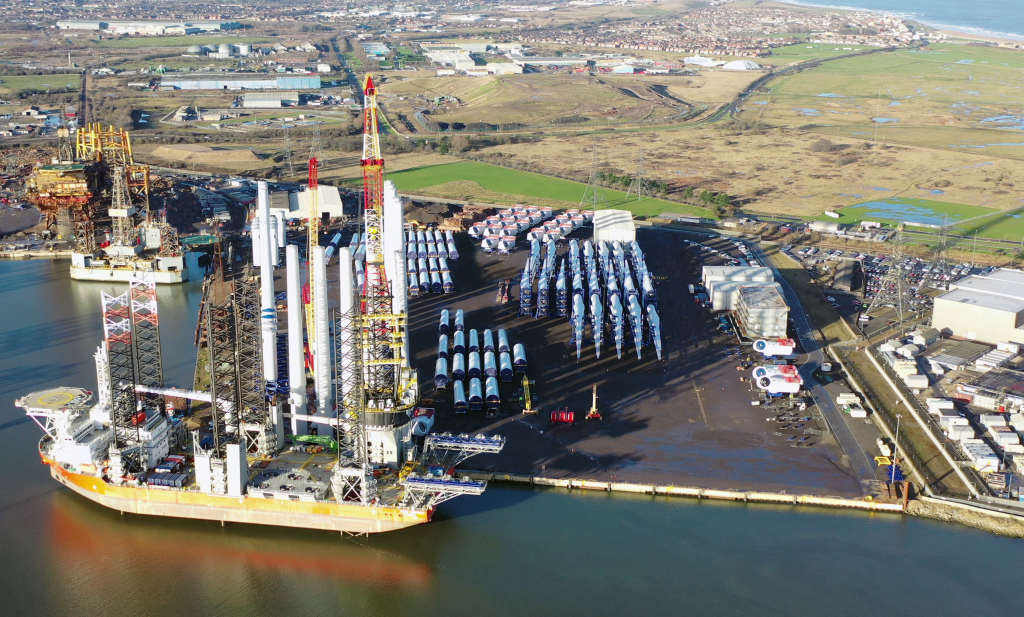
Well, the answer is, biomass has not changed at all. Mostly because we still eat, even if we now eat less; but there are more of us. Metal ores have gone up from 50 million tonnes in 1990 to 120 million tonnes in 2023; I’m sure I don’t need to spell out exactly why. The use of non-metallic minerals was 575 million tonnes last year, up from 320 million tonnes in 1990. And as for fossil fuels, it’s down from 330 million tonnes in 1990 to 225 million tonnes in 2023, a drop of perhaps 1/3. Note though that the value for 1996 was 241 million tonnes – so the drop from 1996 to 2023 is more like 7%, on these numbers.
We don’t produce any of our metals: the ONS spreadsheet helpfully breaks out the source countries, and country groups. The UK’s column for metal ores is uniformly filled with one word: [low]. The largest country group is “rest of the world”: i.e. countries ex the OECD, whose controls on pollution are unlikely to be quite as robust as the ones we nominally insist on here (I say nominally because of the disgraceful pollution of our rivers by sewage, not because of their pollution by mine tailings).
The consequences of our increasing consumption are out of sight, and out of mind. What pollution occurs in our name in far-flung places need not concern us, right? The only important thing is local emissions of carbon dioxide.

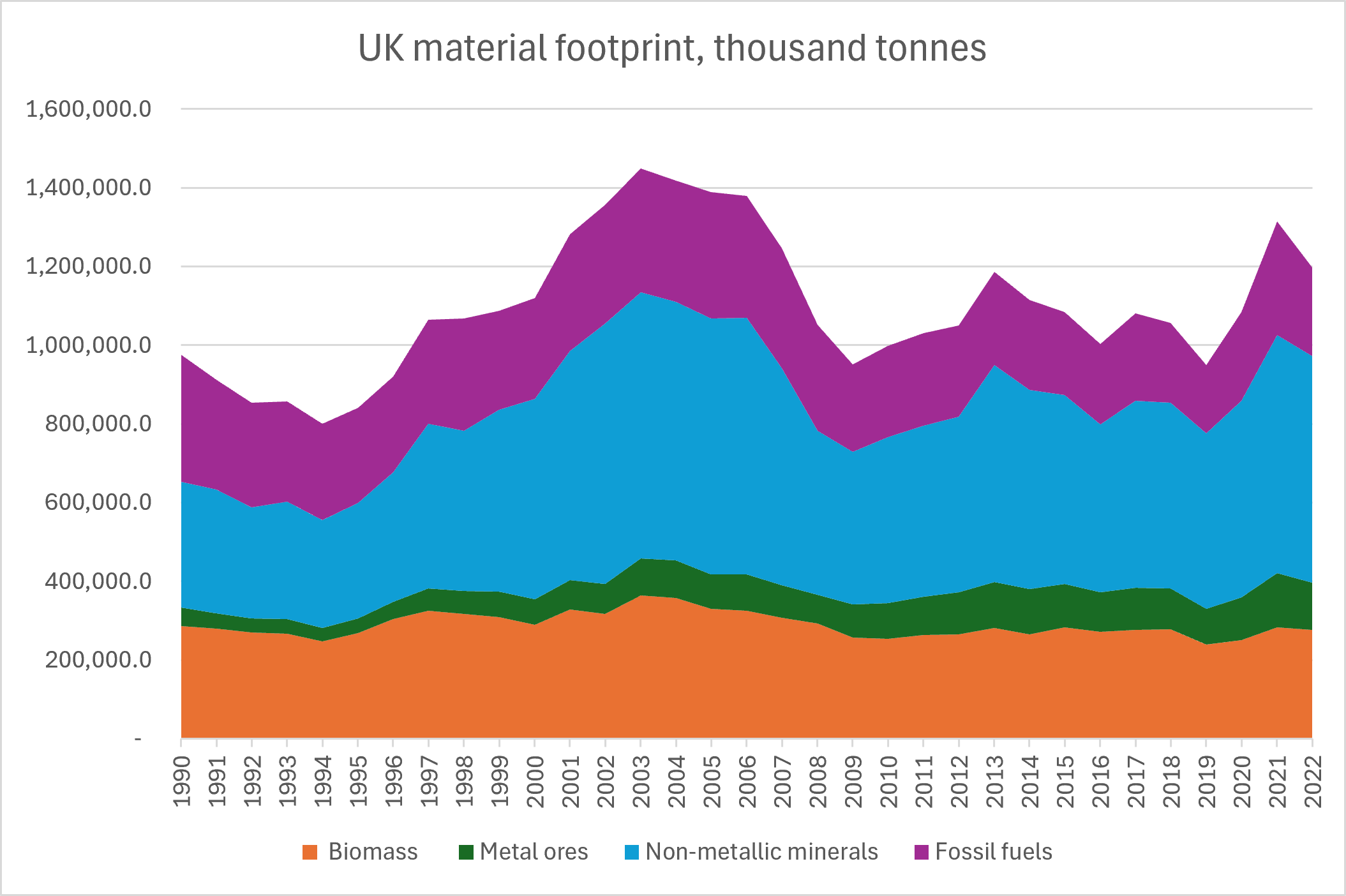
The featured image comes from Pexels, but if you go and look at the Humber port on Google Earth, at about 53.655 N 0.24 W, you’ll see something very similar, but a bit more blurry.


A useful reminder of a theme that is regularly pursued here at Cliscep – namely that there are many forms of pollution and environmental harms. Obsessing about greenhouse gas emissions to the exclusion of pretty much everything else is profoundly stupid. Still, as Jit’s article says, out of sight, out of mind. Real pollution caused by UK consumption apparently doesn’t matter if we don’t talk about it.
LikeLiked by 1 person
Oh, Jit! You were doing so well, as usual, and then fell for another bit of green gaslighting: “the disgraceful pollution of our rivers by sewage”. Like 90% of the global population who have the benefit of any sort of sewage treatment, we operate a combined rainfall and sewage system, built, like our railways, on the earlier work of our forbears. This means that at times of heavy rainfall, highly diluted sewage can be discharged into rivers, which our modern science can then detect in parts per billion (or even trillion).
We could rebuild the entire national system to segregate rainfall and sewage to eliminate this possibility, but the cost would be in the hundreds of billions of pounds – does anyone really want to argue this would be the best use of our limited resources, just to appease a few wild swimming nuts?
I’m old enough to remember the state of our rivers (and seaside) in the 60s and 70s, when they were in (local) government hands and most of them were grossly polluted with sewage and other effluent and were as a result biologically dead. Today they have salmon and otters swimming in them. There are problems with river pollution that need addressing, mostly eutrophication as a result of runoff from intensive farming, and the inability of government to build the infrastructure to deal with our bloated population numbers.
LikeLiked by 2 people
I guess we’re all liable to “gaslight” about issues close to our heart and, as a water engineer as was, I certainly concur Chris Miller’s remarks pollution in that sphere and what can ralistically be done about it. Our population is then labelled as “bloated”; some interesting solutions spring to mind.
If we really want to talk about something that has changed big time over a lifetime (85 years in my case) I would point to the collapsed insect population. Where are all those craneflies (daddy-longlegs) and splatted windscreens? Perhaps we are glad to see the back of those bothersome presences, but the transformation is massive.
On the solar radiation question, I run a weather station which includes solar radiation. The current W/m2 numbers are no different to what thy were last June or the June before, peaking at 800-900 W/sq m most days. Currently 759 as I erite but bobing up and own with every wispy cloud.
LikeLiked by 1 person
Sure guys, and in the 1950s the detergent in washing up liquid used to cause snowstorms of suds to blow through town centres, free parasite eggs going along for the ride. And before that, we actually had sewage farms in the original understanding of the term. Just because now is better than before does not mean now is good.
There is no excuse for any kind of sewage pollution incident any more, not in a supposed first world country, not in a world where tens of billions are squandered on Net Zero.
I presume you did not have Thames Water in mind when you spoke of gaslighting. In fact, I don’t think many of the regional water companies have unblemished records.
Regarding the increased population, new developments, road, housing and commercial, have attenuation basins that theoretically remove the possibility of pollution incidents.
LikeLike
Informative article again Jit.
However I would agree with Chris about the “sewage entering watercourses” bit.
I’ve often wondered if people think sh*t & other flushed waste magically disappear.
LikeLiked by 1 person
Jit – just read your reply comment, interesting – What is the difference between soakaway and attenuation systems? | JDP – quote –
“Basically, attenuation means to temporarily store storm water for a period of time, to then release back into a watercourse or sewer network. The storm water is collected and routed into the sewer the normal way but with the use of flow controls, this allows a controlled volume to flow through into the main system. During a heavy rainfall, the rest of the excess water, which would be backing up at this point, is fed into the crate system where it is held until its ready to re-join the main system. When this happens, it will return back into the water system and exit through the flow control at a regular, predevelopment rate; preventing flooding downstream.”
LikeLiked by 1 person
We have 2 attenuation ponds or sumps catching heavy flow from the A9 , but, walking past on a sunny day you can see the rainbow oil/petrol scum on the top. Roof area over a certain size (> m2 ?) requires separate routing to local streams, while car parks and HGV loading areas have large petrol traps to allow clean run off to the local streams.
LikeLiked by 1 person
It isn’t just that we’ve off-shored manufacturing:
“UK relies on heat-stressed countries for fruit and veg it could grow itself – report
Food Foundation sounds alarm over supply risks and price shocks as about 40% of Britain’s food is imported”
https://www.theguardian.com/environment/2026/aug/19/uk-heat-stressed-countries-fruit-veg-import
So it’s a great idea to take agricultural land out of production and cover it in thousands of hectares of solar panels….
LikeLike