JUN 03 2026
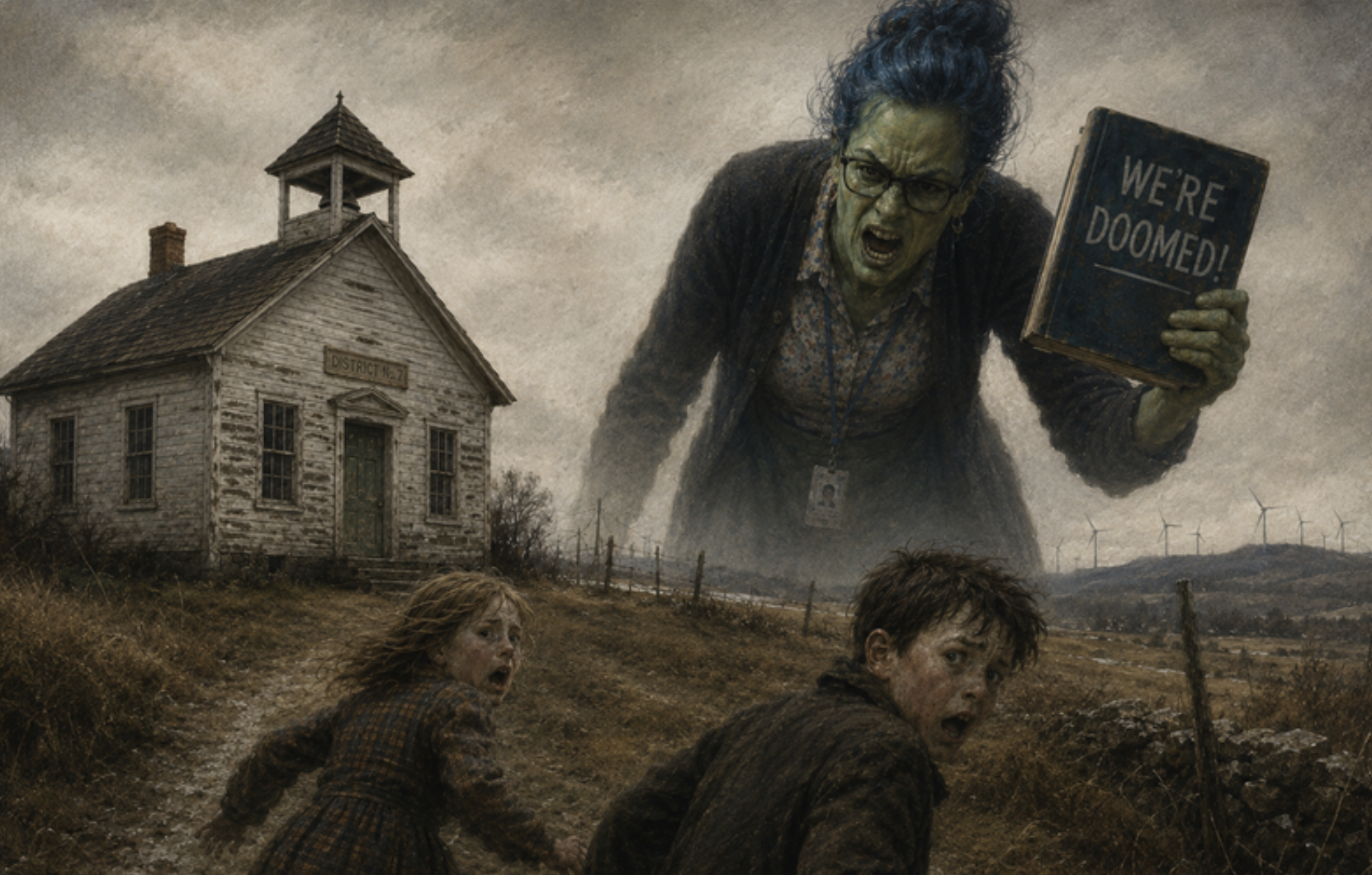
A new battle has started for the souls and sanity of Australian schoolchildren. On one side are the climate indoctrinators and panic merchants, led by woke medicos and psychologists with about as much climate expertise as podiatrists.
They’re determined to instil students from age five with their own apocalyptic dreads of what the UN secretary-general called “the era of boiling oceans” and “highway to climate hell with our foot on the accelerator”. For this lot, every hot day, flood, or bushfire is proof of climate doom, never mind that hot days, bushfires, droughts and flooding rain are how this sunburnt country has operated since 50,000BC.
Those defending children’s right to a carefree childhood are parents and the like — for whom the climate-doom scenario doesn’t pass the pub test. They include the now country-leading 31% bloc of One Nation fans. The dissidents particularly don’t want schoolkids brainwashed about useless trillion-dollar net-zero ambitions.
The net-zero sceptics have noticed, for example, that the scares and fears that teachers and woke psychs dump on schoolchildren were quietly debunked as “implausible” by 44 IPCC scenario-builders (including a handful of Australians)[1]in a top-level paper two months ago.
The 44 acknowledged that their former dark visions involved nothing more than a worst-case dreamscape for Year 2100. This stale scenario, from 2008 (RCP 8.5), has been recycled globally by tens of thousands of grant-hungry university scribblers and their media shills. The Australian enemy of science in 2021 published its own doom-laden liturgy, The risks to Australia of a 3°C warmer world, built on the now-implausible RCP8.5. [2] The Academy cites it more than a dozen times.
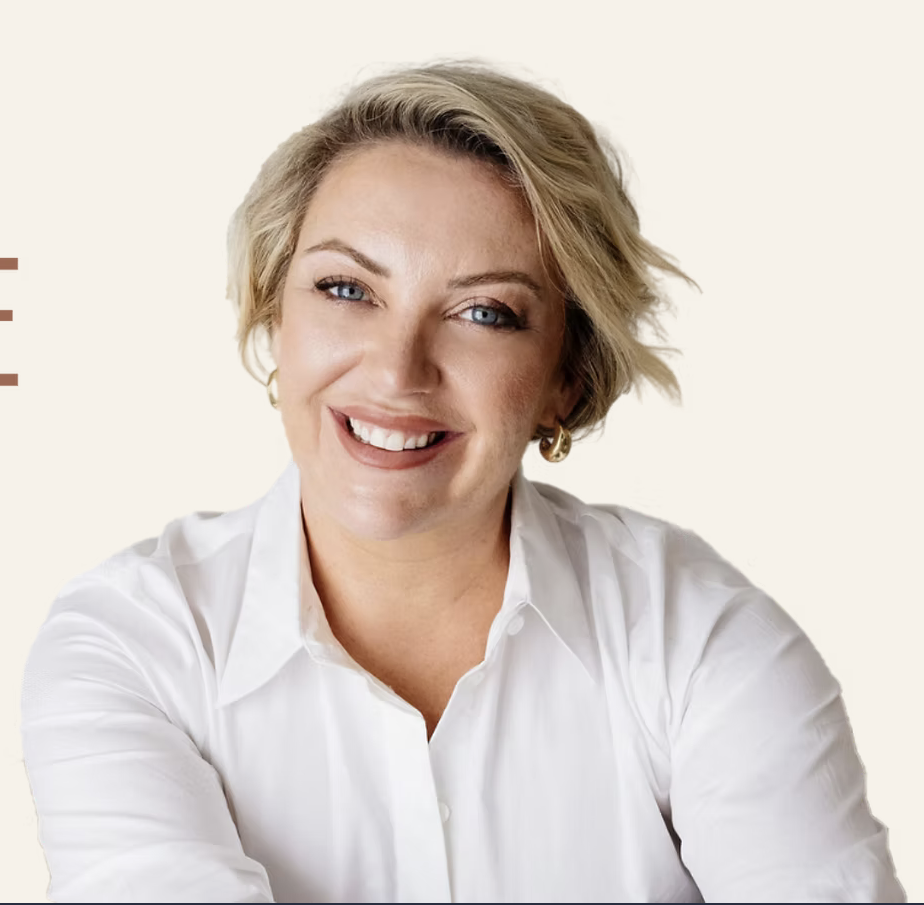
The Fort Sumter-like opening shot in this uncivil climate war was fired via a paper in mid-March by consulting psychologist Clare Rowe (below) for the Institute of Public Affairs, where she’s an Adjunct Fellow:
♦ Climate Anxiety in Pre-Adolescent Children: A Neuroscientific and Psychological Perspective (30 May 2025)
and a fortnight ago,
♦ “Evidence over Ideology – Protect Children by Restoring Clinical Standards in Climate Anxiety Treatment”.[3]
Her current antagonists include close to 50 medico-psychology bodies, green groups, and some 300 individuals who’ve signed an open letter purporting to refute her latest paper. Their ten-page letter is titled, “Climate Science not Climate Silence: Safe, accurate climate education & evidence-based support helps, not harms, young Australians’ mental health.” Signatories include the Royal ANZ College of Psychiatrists, the Royal ANZ College of General Practitioners and the Black Dog Institute, along with the uber-loopy panic merchants Psychology for a Safe Climate crowd, Cool Plus and Cool Australia alarmist lesson providers, and Australian Youth Climate Coalition, organisers of the School Strikes 4 Climate.
Tacked on are individuals like green-minded Senator Zali Steggall, an activist by name of Sally Giblin as “Solutionist and Story Teller for ‘Be the Future”, interesting academic Dr Blanche Verlie, Dr Simon Bradshaw of Tim Flannery’s flatulent Climate Council, stick-insect authority and hairdressers’ adviserDistinguished Professor Leslie Hughes, and all the usual academic and medico-psych suspects baying for wind turbines to save the planet.If I sound a bit testy it’s because my own childhood was degraded by equivalent adult-imposed political dogma. Also, today’s climate muddle brought to us by Canberra’s Uniparty makes my brain hurt (“Please, Brunei, send us some diesel.”)
In this essay I’ll set out the arguments between Clare Rowe and the annoyed alarmists, doing my best to stay objective. Sadly neither party provides concrete examples of what kids actually get taught at school on climate.
In practice, teachers by the thousands use 100 or more free online climate lessons from above-mentioned green-left lobby Cool Australia, which lists its address as “Melbourne/Naarm 3181”. Cool’s explicit goal is to turn kids into activists for renewables. If kids suffer eco-anxiety as collateral damage, well it’s all in a good cause. Cool throws in some wishful “hope” messaging to show they care about the kids’ mental health.
I’ve looked at 150 Cool lessons and Powerpoints involving climate-change. They’d make any sane parent reel back in horror. Setting out this material will comprise a second part of my essay.
Duelling psychs: Rowe vs School Alarmists
Clare Rowe is a Sydney-based director of Rowe & Associates Child Psychology Practice (and mother of eight- and nine-year-olds). Her IPA profile says she “advocates for developmentally appropriate education and supports empowering young minds without overwhelming them.”
Her latest 27-page paper on kids’ teacher-created distress and “catastrophic thinking” is somewhat arcane for readers. Its essence is that long-standing psychological practice with over-anxious kids is to gradually reduce the stress
through cognitive restructuring [assessing ‘real-ness’ of catastrophic fears], graduated exposure, reassurance, and the development of emotional regulation and coping skills.
By contrast, emerging treatments to climate anxiety often involve emotional immersion, validate existing fears, discourage reassurance, and promote activism or collective action as coping strategies.
In clinical terms, fear is affirmed rather than examined, distress is sustained rather than contained, and emotional intensity is reframed as a moral virtue.[4]
She describes the activist approach as “ a methodologically unsound, ideologically driven model that is being implemented directly into classrooms and therapy rooms without due diligence or safeguards.” She warns that it risks ‘duty of care’ lawsuits from parents and guardians for needless departure from proven clinical best-practice.[5]
Rowe particularly deplores that this destructive ‘therapy’ is applied to kids who lack the maturity to assess climate alarm, and with teachers encouraging kids “to take responsibility for global problems”.
Children’s mental health care must remain grounded in evidence, developmental appropriateness, and a clear duty of care. Emotional distress should not be preserved or mobilised for social or political ends.
Clinicians with strong views on climate change or other social causes should avail themselves of the democratic process to press for their desired policies, rather than use the consulting room as a site for advancing a political agenda.
She says messaging in schools about climate as a moral crisis typically begins by inducing fear or despair, then shifts toward encouraging supposed climate-cures like bike-riding and eating less meat, which happen to be beyond kids’ control and set them up for frustration and low self-worth: “The purpose of education is to cultivate scientific literacy and critical thinking, not to mobilise students as political advocates.”Teachers’ crisis-messaging can also create emotionally-charged classrooms, she says, where the children who doubt the claims are marginalised or made to suppress their non-conformity. The teachers’ righteousness can also undermine the authority of parents wanting to re-assure their children about the planet’s viability.
Rowe recommends the national cross-curriculum priority for ‘sustainability’ be discontinued for primary-school classes, an advocacy which outrages the green-left because the ‘sustainability priority’ in schools is their Trojan Horse permitting swathes of doom-cries about irreversible climate collapse. The sustainability mantras permeate not just natural sciences but English, the arts, even music, health and sport.
She also recommends a proper audit of green groups’ material adopted by teachers and promoting political campaigns, lobbying of government and businesses, and pushing kids into climate activism. She specifically mentions the Cool.org platform.
Additional to papers, Rowe in her frequent media interviews seeks to debate with professional bodies about what kids 6-8 and older can handle:
This is not about climate change or energy policies but about children’s developmental psychologies. And yes, they are absolutely abandoning their responsibility to children’s mental health.
Rowe told The Australian that kids presenting with eco-anxieties are often environmentally aware but suffering hopelessness and panics. “Some avoid school activities, become distressed during weather events, or express fears that they will not grow up or have children of their own.” She told Radio 2CC her practice had seen
…increasing numbers of children coming through absolutely beside themselves and terrified that they won’t grow up to adulthood.
She blamed teachers using strong emotive language about climate perils to six- and seven-year-olds, telling their classroom charges “There’s no Planet B” and that species are dying:
They’re actually paralysed with anxiety, they don’t think they have a future.We need to get back to shielding kids from adult concerns. We don’t teach really little kids about world wars and other horrors of the world. In this [climate] topic, we expose them to everything. Parents need to stand up and say, “We don’t want this for our children.”
The anti-Rowe letterThis open letter says Clare Rowe’s papers misquote research, ignore context “and most of all miss the point.” Good climate teaching empowers kids “with the skills to thrive in a changing climate” and builds their coping capacity and well-being. Their concerns should not be silenced, nor treated as mental health issues.
Kids in fact need not less climate education, the missive continues, but even more of it. Accurate material helps kids, their professionals and the community to build emotional resilience, agency and “hope of the next generation”.
The signatories acknowledge kids’ widespread climate distress, quoting studies that two-thirds to three-quarters of Australian youngsters are affected. But the letter says it’s misinformation that climate teaching promotes these anxieties. The distress is from the real-world climate impacts, not classrooms:
Yes, climate change is confronting, but so are topics like death or illness, and we don’t shield children from those. There is strong evidence that children, even in primary school, are capable of engaging with complex topics when supported by honest, developmentally appropriate teaching.
The writers claim, without citing a shred of evidence, that Australian droughts, floods, bushfires and storms are getting more severe and frequent. They blame global warming and forecast (without attribution) worse weather in coming decades.
Kids have seen homes destroyed, species lost, food prices soar, and political leaders delay critical decisions, they write. Avoiding discussion of kids’ lived climate reality harms them further. Kids themselves ask for more information. Any “socially constructed silence” causes loneliness, isolation, and anxiety, especially as kids get adverse climate information from multiple social sources.
Schools offer a rare and valuable opportunity to correct and ground that information in facts, build community and emotional resilience, and provide constructive pathways forward.
Proper climate teaching, they demand, must
♦ relate ‘local environmental experiences’ [presumably weather] to global systems
♦ spotlight the many climate solutions to build youngsters’ comprehension, hope and agency
♦ build trauma-aware, mental health-informed approaches for emotions, coping tools, action and support
♦ honour First Nations’ 50,000 years of knowledge, “which continues to offer guidance on adaptation and resilience”
♦ invest in teacher training, curriculum reform, and community-wide education and
♦ uphold the cross-education priority for sustainability.
The letter concedes that research on dealing with kids’ climate distress
remains in its early stages. However, existing evidence suggests interventions targeting hope and meaning-based coping are likely to be effective, which the school environments are perfectly equipped to cultivate.The writers downplay the cognitive behavioural therapy favored by Clare Rowe, saying that it “may be less helpful”. They end with a call to empower youngsters about climate change,
the defining challenge of this generation. We know our children are facing a tough future, and we know that preparation is key to successful adaptation.
A commenter below The Australian’s coverage (May 30) said it was ludicrous for the letter to say children could verify global warming by real life experience, as there has been no measurable increase in extremes during their lifetime. Psychiatrists should cease trying to turn one hot day in a child’s life into a doomsday scenario, the comment continued.
Another said kids should worry about skateboard accidents and inheriting the government’s ‘debt bomb’, rather than global warming: “It is disgraceful that their youth and emotional well being are destroyed by woke climate hysteria.”
Others who grew up during the Cold War said they had nuclear war to fear but had not been traumatised at school about this very real peril.
Tomorrow: The alarmist lessons from Cool Australia
Subscribe to Tony Thomas’s free substack here
[1] Notably Dr Andrew King of Melbourne University
[2] The Academy paper The risks to Australia of a 3°C warmer world, p53: “RCP2.6 corresponds to around 1.5°C warming over Australia and RCP8.5 corresponds to 3°C warming over Australia .” The Academy should retract this fear-mongering trash immediately.
[3] IPA’s Colleen Harkin and Margaret Chambers published another in the series, “Climate of Fear: How the National Curriculum Drives Climate Anxiety Among Children” (December 2025)
[4] Rowe quotes the Australian Psychological Society:
“Psychologists are encouraged to support individuals in expressing their eco-anxiety without minimising it, and to facilitate emotional validation alongside engagement in meaningful action”
[5] Rowe: The standard of care does not change because a topic is politically charged. Psychological treatment must remain anchored in evidence, developmental appropriateness, and professional neutrality.


From the conclusion of the paper a fortnight ago (thanks for the link):
Surely it’s difficult to disagree with that? Looking forward to Part 2.
LikeLiked by 2 people
Treat climate anxiety in children as a rational response to a doomed world, or as a wholly artificial phenomenon driven by apocalyptic lessons? I know which I think would result in the best results.
If schools were giving RE lessons created by a religious cult that claimed to believe that the end of the world was nigh, and using the fear that created to generate new young recruits, I doubt the public would be quite so relaxed about it as they are when the original sin narrative is the rise of their own civilisation.
LikeLiked by 2 people